

When it comes to workplace fire safety, the humble evacuation sign is often taken for granted. Yet these small, unassuming fixtures play an absolutely critical role in guiding people to safety during an emergency. Poorly maintained or incorrectly positioned signage can turn a manageable situation into a tragedy — and that is a risk no responsible employer or building manager should be willing to accept.
At a glance
- Inadequate placement and obstructed visibility of fire evacuation signs pose significant risks to safety during emergency situations.
- Photoluminescent signs are recommended to ensure readability in conditions of low light, smoke, or panic.
- Signs must be regularly inspected and replaced if they are faded, damaged, or no longer accurately reflect the building’s current layout.
- UK regulations strictly define the required appearance, color, and format for fire exit signage to ensure consistency and compliance.
- Structured, regular audits and fire drills are essential tools for identifying gaps in the evacuation signage network and verifying staff comprehension.
- Building managers should tailor their signage strategy to the specific layout, ambient lighting, and occupancy levels of their premises.
- A comprehensive safety strategy must integrate clear signage with personal emergency evacuation plans and ongoing staff training.
The most frequent mistakes found on fire evacuation signage
Poor Placement and Visibility That Put Lives at Risk
One of the most common failings in fire safety signage is inadequate placement. A sign that cannot be seen clearly from a corridor junction, or that is obscured by furniture, shelving, or temporary installations, is effectively useless in a genuine emergency. In larger buildings particularly, evacuation routes must be marked continuously so that anyone — whether a regular employee or an unfamiliar visitor — can follow the path to an emergency exit without hesitation. Regulations in the UK, including the Regulatory Reform (Fire Safety) Order 2005 and the Health and Safety (Safety Signs and Signals) Regulations 1996, set out clear requirements for the visibility and format of these signs.
It is equally important to consider the conditions under which signs must be readable. Low lighting, smoke, and panic all reduce a person’s ability to process information quickly. Photoluminescent signs, which glow in low-light conditions, offer a meaningful advantage in these circumstances. Employers conducting a thorough fire risk assessment should evaluate whether standard signs are sufficient or whether enhanced visibility options are warranted for their specific building layout.

Outdated or faded signs that no longer meet safety standards
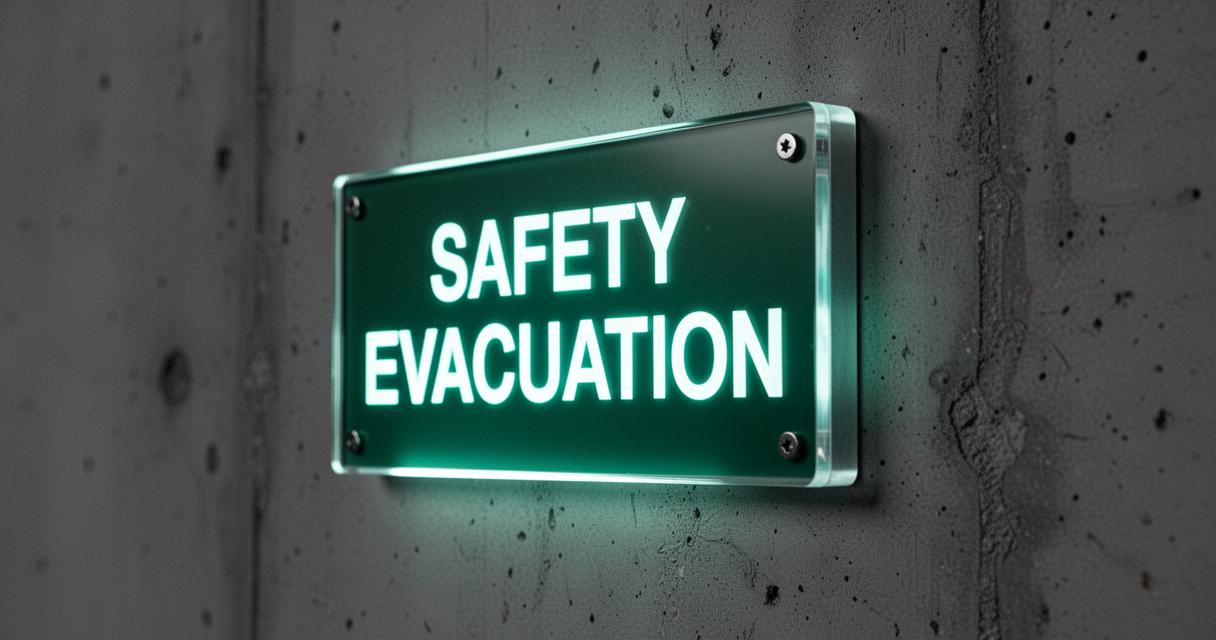
Over time, signs fade, crack, or become damaged — and in some workplaces, updates to the floor plan mean that old signage no longer reflects actual evacuation routes. This is a genuine and frequently overlooked hazard. A faded sign pointing towards a route that has since been reconfigured could cause dangerous confusion during a real evacuation. UK regulations require that fire exit signs be square or rectangular, featuring a green background with white symbols, with at least half the surface area in green. Any sign that no longer meets this standard must be replaced promptly.
Beyond physical deterioration, signage can become outdated following building refurbishments, changes in room usage, or the introduction of new fire doors. Each of these scenarios demands a fresh review of the entire sign network to ensure it remains coherent and compliant. Building safety compliance is not a one-time achievement — it requires ongoing attention.
How to ensure your fire evacuation signs are fully compliant
Conducting regular audits of your evacuation sign network
A structured audit process is the most reliable way to stay on top of signage compliance. During an audit, every sign in the building should be checked for visibility, condition, correct positioning, and alignment with the current fire safety plan. It is worth involving your fire warden team in this process, as they are often best placed to identify practical gaps that a desk-based review might miss. Audits should be documented and any remedial actions tracked through to completion.
Regular fire drills also serve as an informal audit of signage effectiveness. If employees hesitate at junctions or take incorrect routes during a drill, this may indicate that directional signs are unclear or missing. Post-drill debriefs are an excellent opportunity to capture this feedback and feed it into your emergency evacuation procedure. Participation in drills and accurate headcounts at the muster point are also key indicators of how well the overall evacuation plan is understood by staff.

Choosing the Right Signage for Different Building Layouts and Conditions
Not every building presents the same challenges. A single-storey retail unit with obvious exits may have different requirements from a multi-floor office block with complex internal layouts. Smaller spaces where exits are self-evident may not require extensive signage, but larger or more complex premises demand a comprehensive and clearly marked network of evacuation routes. The specifics of each environment — including ambient lighting levels, the presence of hazardous materials, and the volume of people likely to be present — should all inform signage choices.
It is also essential to ensure that your emergency preparedness strategy accounts for all building users. A personal emergency evacuation plan should be developed for any individual who may have difficulty evacuating independently, whether due to a physical disability or another factor. Signage alone cannot meet the needs of everyone, and a truly robust fire prevention strategy integrates physical signs with trained personnel, clear communication, and regular fire safety training for all staff. Getting the details right across every element of your approach is what separates genuine workplace fire safety from mere box-ticking.